

How to Manage 4 Different Framework Agreements in Salesforce
From Regular to Occasional and Drawdown Orders, as well as ‘License to Hunt’, Discover How to Manage and Forecast MSAs in Salesforce.
Last updated March 13, 2026



Download the 12 Must-Have Charts for Your Salesforce Dashboard eBook today!
Framework agreements in Salesforce (also called umbrella agreements, outline agreements, master services agreements, or MSAs) play an essential role in many companies because they set the terms for your most critical customer relationships.
There are four different types of framework agreements. Some spread revenue over time, others handle regular orders, and some are more ad hoc. In all cases, companies are often uncertain about how to manage these framework arrangements in Salesforce.
In this article, we explore the different types of agreements and how to manage them in Salesforce. We also explain how tools like the GSP Product Schedules app make it super simple to schedule revenue and quantity over time so you can forecast accurately.
Framework Agreements in Salesforce
What are Framework Agreements?
Framework agreements are contracts between buyers and sellers that describe the overarching terms of the commercial relationship. Typically, they include prices, applicable discounts, and related terms and conditions. They can also define what, how, and when the customer receives the products and services – although some organisations choose to establish these details on a deal-by-deal basis within the parameters set out in the framework agreement.
Additionally, some companies differentiate between:
- Framework agreements: where the total order value is not precisely defined.
- Long-term contracts: made for a specific set of products at an agreed-upon price.
There is no right or wrong way to manage your customer engagements using framework agreements. It all comes down to what works best for you to ensure your business is protected and your sales teams aren’t preoccupied with endless admin.
4 Types of Framework Agreements
Broadly speaking, there are 4 different types of framework agreement:
- Drawdown orders
- Regular orders
- Occasional orders
- License to hunt
However, you may use alternative terms, such as multi-supplier, single-supplier, closed frameworks, and call-off contracts, to describe the agreements in your business.
The following sections consider each type of framework agreement in more detail:
1. What Are Drawdown Orders?
With drawdown orders, customers place a large order, spread over a long period of time. Usually, the framework agreement defines the total value or quantity of products the customer will purchase over the period, sometimes with minimum and maximum limits. The customer 'draws down' monthly or quarterly against an assumed volume. Of course, if the customer's total drawdown differs from the overall value or amount specified in the framework agreement, it can lead to some challenging negotiations when the contract is due for renewal.

With order drawdowns:
- It may include a monthly or quarterly breakdown of expected orders.
- Discounts are given based on the total anticipated value or quantity.
- Salespeople engage with customers to agree on details such as delivery arrangements.
Drawdown Order Example
Based in Greensboro, NC, Gilbarco Veeder-Root is one of the world's largest manufacturers of gas (petrol) pumps.

The company has drawdown framework agreements with many petrol and gas retailers. These documents define the products, pricing, commercial arrangements, marketing arrangements, and legal terms of the contract with each retailer.
Usually, the gas station operator draws down the pumps over the agreement period, often in line with a refit or expansion program. A salesperson handles each order and sends the completed details to the manufacturing team.
2. What Are Regular Order Framework Agreements?
When companies sell large volumes of relatively small-ticket items or consumables, a regular order is the most straight-forward framework agreement to use, because customers simply place orders when they need to restock.

When compared to drawdown orders, regular order agreements:
- The customer has infrequent contact with a salesperson.
- Orders are placed via an online portal, which integrates with the ERP system.
- Pricing and discount arrangements are embedded in the ERP system.
Regular Order Example
Ammex Corporation, based in Kent, WA, sells disposable gloves and other personal protection equipment used in many industries.

The company creates a regular order framework agreement with its main customers. The contract specifies the price for each product based on the anticipated volume and terms and conditions.
Customers place regular orders via an online portal that integrates with the ERP system. The orders are imported into Salesforce weekly, giving account managers a complete view of customer buying patterns.
3. What Are Occasional Order Framework Agreements?
Occasional order framework agreements are often called an MSA and cover the commercial terms and legal arrangements. However, separate specifications define the products and services of each order.

Occasional orders:
- Are often used by professional services businesses when first engaging with a customer.
- Both sides recognize the potential for further work, but there is no explicit guarantee of future projects.
- The MSA covers any subsequent assignments.
Occasional Order Example
Based in the UK, Agile Consulting provides high-end IT professional services to companies in the financial services, telecoms, and manufacturing sectors.

Agile has master services agreements with many of these businesses. However, each project is a significant undertaking, with the scope defined in a Statement of Work (SoW). The SoW describes the resources that Agile will use on the project, estimated effort, critical milestones, delivery assumptions, and other details. Nevertheless, the MSA contains the resource rates and overarching legal arrangements.
4. What Are License To Hunt Framework Agreements?
A license-to-hunt framework agreement allows one party to seek deals in the customer's business or a group of companies. This type of arrangement is common in financial services, pharmaceuticals, some retail sectors, and many other industries.

License to Hunt Example
Toronto-based Quark Expeditions offers polar travel cruises. It sells directly to customers and through various general and specialist travel agents.

Many travel agents belong to a trade organization or buying group. The trade organization negotiates commissions, service levels, and other arrangements with holiday providers. The holiday providers cannot approach individual travel agents within the group unless they have a framework agreement with the main body.
Quark works hard to establish framework agreements with the leading trade organizations. Once those agreements are in place, account managers are licensed to hunt with the agents linked to that organization.

How To Handle Framework Agreements and MSAs in Salesforce?
Before we get to how you manage framework agreements in Salesforce, let’s first consider whether you should use Salesforce to manage the process of acquiring framework agreements.
There are three good reasons to use Opportunities to manage your acquisition process:
- Securing a framework agreement is a sales process: you can track the stages like any other opportunity. You can use record types so your framework agreements have different stages than other Salesforce opportunities.
- You can track your framework agreement pipeline: by distinguishing framework agreement opportunities from straightforward opportunities. Use reports and dashboards to gain visibility of deal progress, win rates, and other performance metrics.
- Accurate revenue forecasting: use the Amount field on the opportunity to track the notional value of individual framework agreements, and the overall pipeline of these deals to prioritize agreement opportunities you should focus on. Then filter framework agreement opportunities from other sales performance reports to avoid double-counting.
So, what happens once your framework agreement is signed?
Should you use opportunities to manage your framework agreements in Salesforce?
The answer: it depends.
How To Manage Drawdown Orders using Framework Agreements in Salesforce?
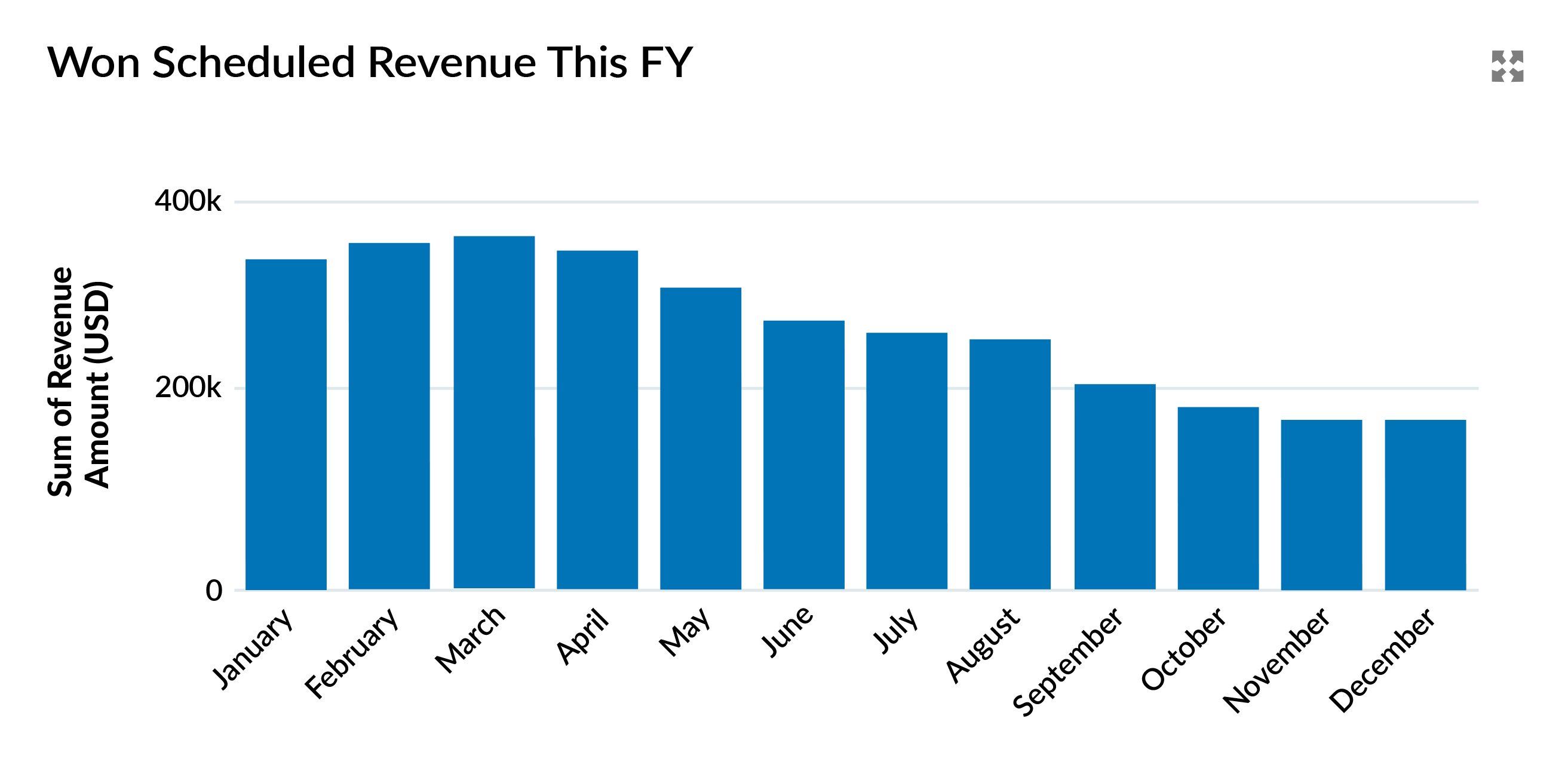
If your business uses drawdown orders, creating a new opportunity in Salesforce allows you to manage the individual orders arising from that framework agreement. It's also a good idea to consider using schedules to track the opportunity, as they describe how you will recognize the income over time.
Often, salespeople engage with the customer on each order within a drawdown framework agreement. They then add products to the opportunity, which represent the goods/services the customer will receive. You can sum the number and value of products added to each opportunity in reports and compare this to the total agreed in the framework agreement.
In some situations, revenue from each order accrues over time, and you need to recognize it appropriately. The GSP Product Schedules app makes it quick and easy for salespeople to create schedules and delivers outstanding visibility on future revenue.
How To Manage Framework Agreements in Salesforce For Regular Orders?
While you need opportunities to manage each drawdown order, you're unlikely to need them to manage revenue on regular orders. That's because customers are placing comparatively small orders via an ERP portal, which then handles shipment, invoicing, and other fulfilment processes.
Creating an opportunity for each regular order would be time-consuming and onerous for salespeople. Instead, a better approach is for salespeople to develop key account plans that define the objectives needed to retain and grow the customer.
Rather than creating opportunities, it's better to pull the orders handled by the ERP or other systems into Salesforce. There are two ways you can do this.
- Importing the data on a weekly or monthly basis.
- By building a direct integration between the two systems.
Organizations often start with the first option and later transition to the second. But in either case, importing the order data gives account managers high-quality and easily accessible information on the number and value of orders their customers place.
That said, you still need an opportunity to manage the process of securing the framework agreement in Salesforce, to which you can then assign the expected products and schedules. This approach enables you to compare what you expected to receive with the volume and value of orders the customer places over time. This insight is essential information for growing accounts, combating competitor threats, and tracking changes in buying patterns.
How To Manage Framework Agreements in Salesforce For Occasional Orders?
With occasional orders, you need an opportunity to manage each framework agreement in Salesforce. That is because each order is comparatively unique, and the framework agreement contains agreed rate cards and other terms and conditions. However, dialogue with the customer is required to define what you will deliver.
To manage these framework agreements in Salesforce, the approach is similar to drawdown orders. The most significant difference is that with occasional orders, there’s less confidence in future revenue, because you have no guarantee the project/order will go ahead.
Nevertheless, completing the customer project may still take a long time. That means you should also consider the GSP Product Schedules app to help you track revenue over time.
How To Manage Framework Agreements in Salesforce For License To Hunt Opportunities?
With 'license to hunt' framework agreements, create an account in Salesforce for every business within the group you can work with. Sometimes, the buying group or overarching organization will provide a spreadsheet you can import to simplify the creation process. Once the framework agreement is signed, you can begin prospecting these accounts and creating opportunities where appropriate.
Again, use Salesforce products and schedules to track revenue from each opportunity over time.
Also, with this type of framework agreement, you should consider using Salesforce campaigns. A significant part of the prospecting process often involves holding your own events or attending industry forums. Tracking the opportunities arising from these initiatives is critical to calculating the event's ROI.
Ready to Manage Your Framework Agreements in Salesforce?
Join the hundreds of companies who are using GSP Product Schedules to help them manage their framework agreements in Salesforce by tracking revenue over time. You can install it now from the AppExchange. And if you have any questions, our team is always here to give you a helping hand – just get in touch.
Framework Agreements in Salesforce: FAQs
There are several ways to do this.
- Create a custom field (Expiry Date) on the Opportunity you use to manage the process of acquiring or renewing the framework agreement.
- Use the Contracts object in Salesforce. The Contracts page layout includes fields for setting the start and duration of contracts.
In both cases, use reports and dashboard charts to provide sales leaders with visibility of expiring agreements or those coming up for renewal.